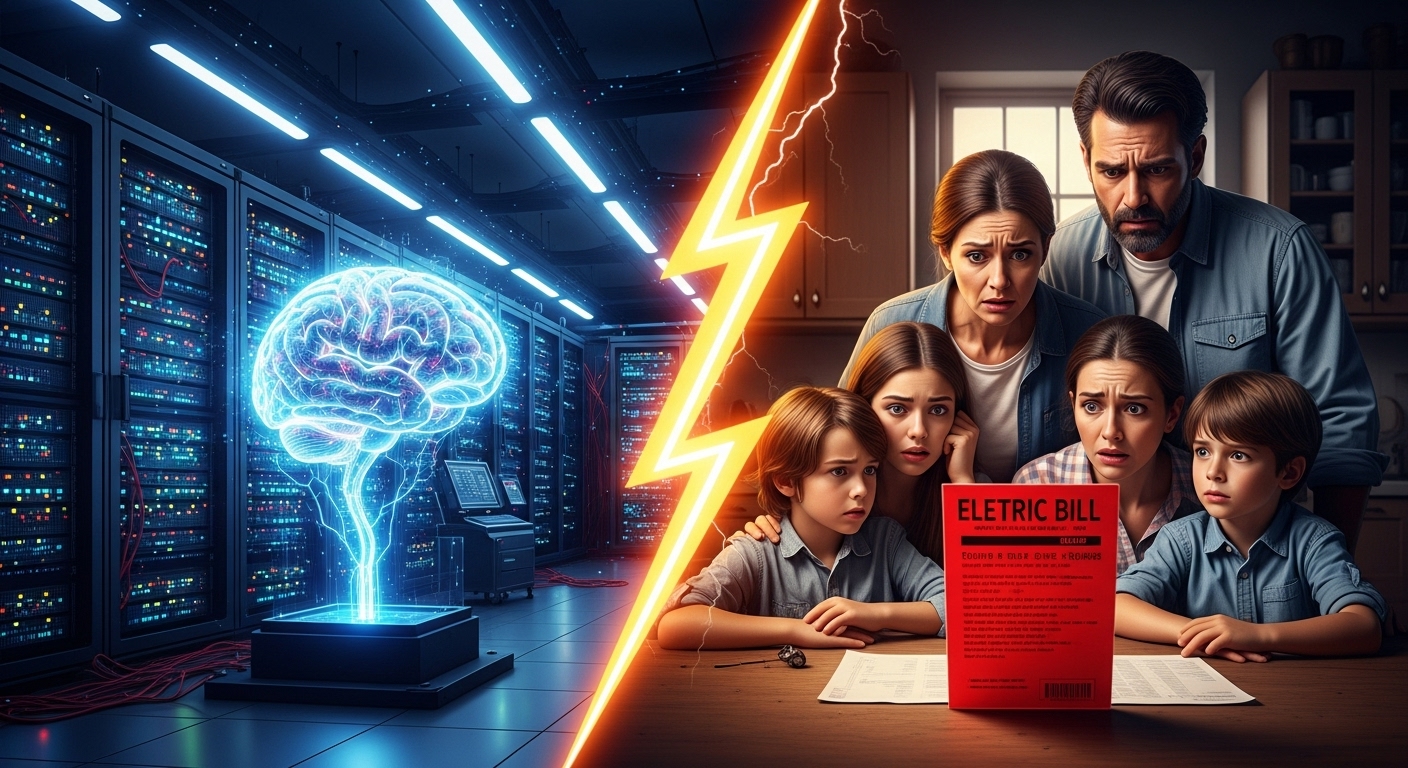
If you’ve noticed your electricity bill creeping up lately, you might be quick to blame your air conditioner or the summer heat. But in 2026, there’s a new “invisible” player at the table: Artificial Intelligence. As we use AI for everything from writing emails to generating images, the massive data centers behind these tools are hungrier for power than ever before. But does their hunger actually reach your wallet? Let’s break it down in simple terms.
FAQ: The AI-Energy Connection
1. Does a single AI search really use more power than Google?
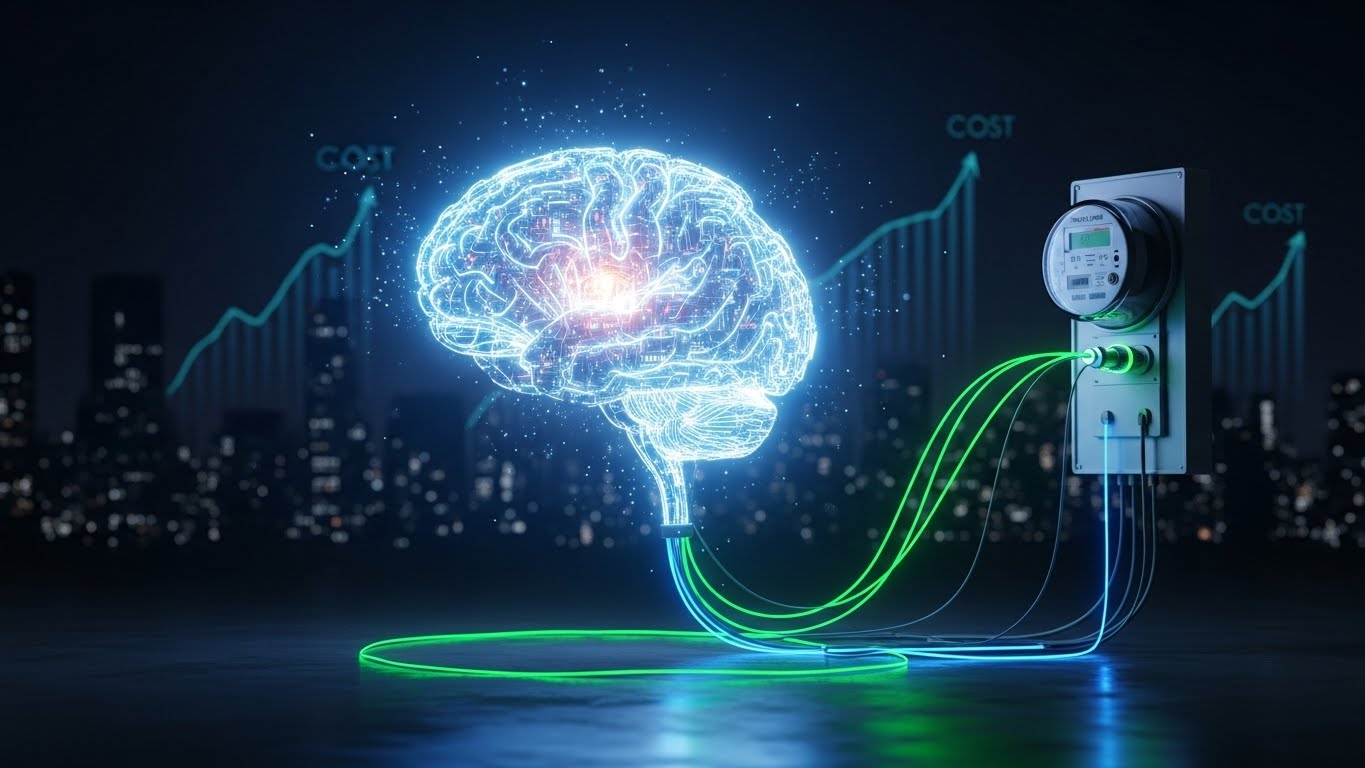
Yes, significantly. Research from the IEA and recent 2026 studies shows that a single query on an AI assistant (like ChatGPT) consumes about 10 times more electricity than a traditional Google search. While one search won’t break the bank, billions of searches every day add a massive load to the national power grid.
2. How are data centers affecting my monthly bill?
This is where it gets tricky for homeowners. To support the AI boom, utility companies are racing to build new transmission lines and substations. In many regions, the cost of this infrastructure expansion is being shared among all customers—including residential homes—not just the tech giants. In some US and European states, “capacity costs” are expected to rise by 5% to 7% in 2026 specifically to handle this new demand.
Advertisement
3. Are tech companies doing anything to help?
Thankfully, yes. Major players like Microsoft and Google have recently committed to a “Community-First” approach. They are starting to fund their own grid upgrades and even investing in small nuclear reactors (SMRs) to avoid passing costs on to local residents. However, these solutions take years to build, meaning the “short-term” bill hike is still a reality for many.
4. Is this happening globally or just in the US?
It’s a global trend. Countries with high data center concentrations—like Ireland, Singapore, and parts of the Philippines—are seeing the most direct impact. In Ireland, for example, data centers are projected to consume nearly 35% of the country’s total electricity by the end of 2026, putting immense pressure on local prices.
AI is a powerful tool, but its “brainpower” requires real physical energy. While we benefit from AI’s efficiency, the transition period of upgrading our global energy grids is currently being reflected in our utility costs. Staying informed about Energy Efficiency in your own home is now more important than ever.
Transparency & Trust: > Disclaimer: This article is for educational and informational purposes only. I am not an energy consultant or a financial advisor. The insights below are based on my personal research into 2026 global energy trends and reports from organizations like the IEA and Bloomberg.
Recommended Reading:
- Curious about future tech? Check out Huawei’s Solid-State EV Battery with 2,000-mile range.
- Is 2026 the Year Solid-State Batteries Change EVs Forever?
Sources:
- International Energy Agency (IEA) – Energy and AI Special Report 2026
- Investopedia – Why Your Energy Bill Keeps Climbing
- Harvard Magazine – How AI Could Be Raising Your Energy Bill
Advertisement