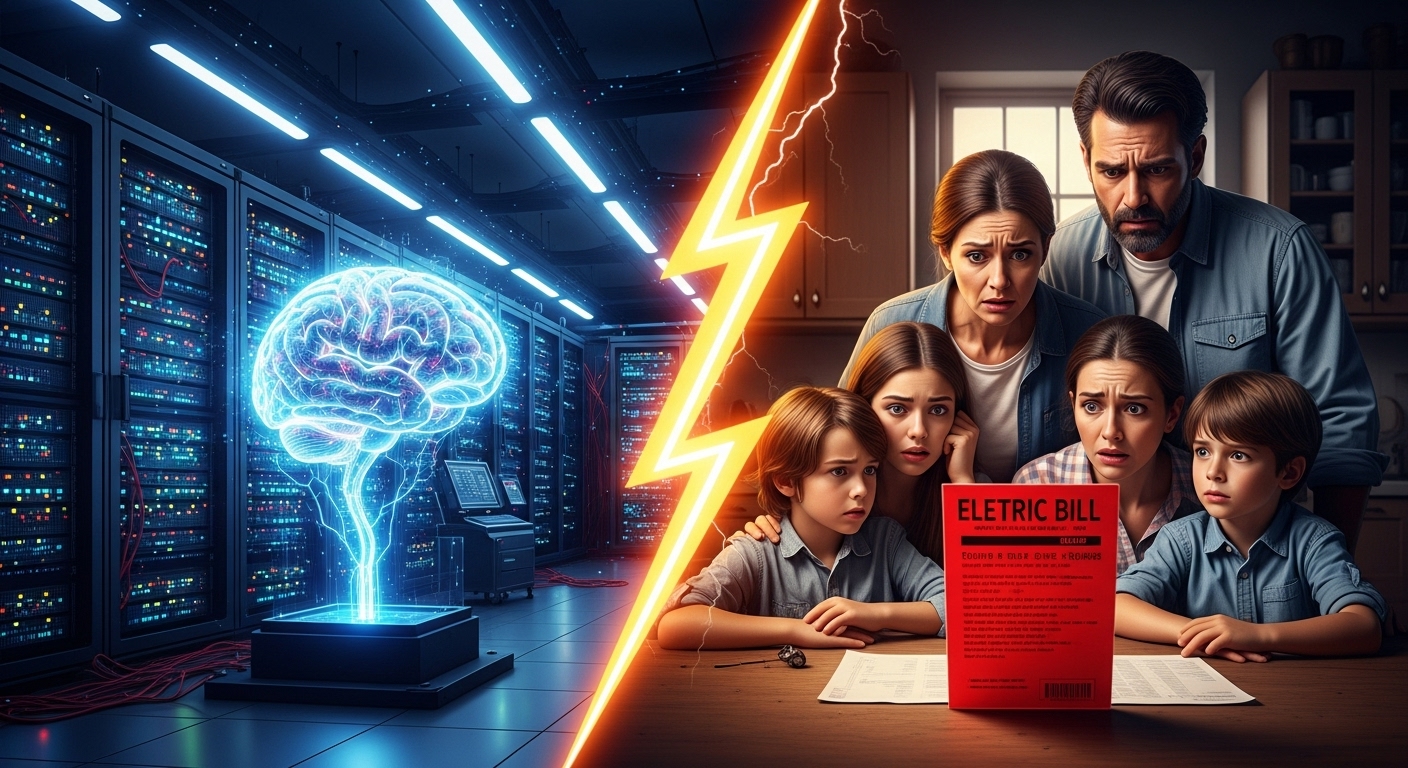
Artificial intelligence is transforming the global economy at an unprecedented pace. From generative AI and autonomous systems to cloud computing and smart infrastructure, AI is becoming deeply integrated into business operations and government services. But behind this technological revolution lies a growing, often overlooked challenge: electricity demand.
According to the International Energy Agency (IEA) 2026 outlook, the rapid expansion of AI-driven data centers is increasing electricity consumption faster than many power grids were designed to handle. This raises a critical question for policymakers, utilities, and tech companies:
Is AI’s surging energy appetite pushing global electricity grids to the breaking point?
Advertisement
This article examines the IEA 2026 report, evaluates the risks to power systems, and explores whether the world’s energy infrastructure is prepared for an AI-driven future.
What Is the IEA 2026 Report and Why It Matters
The International Energy Agency (IEA) is a leading authority on global energy policy, markets, and forecasting. Its annual and multi-year outlooks guide governments, utilities, investors, and corporations worldwide.
The IEA 2026 electricity outlook is especially significant because it highlights:
- Digitalization and artificial intelligence
- Data center expansion
- Electricity demand growth driven by emerging technologies
Unlike older forecasts that focused mainly on industrial growth and population trends, the 2026 report identifies AI as a structural driver of electricity demand, not a marginal contributor. In short, the report signals a major shift: energy systems must now plan for AI as a core load on power grids, not an optional one.
How AI Is Driving a Surge in Global Electricity Demand
AI doesn’t operate in a vacuum. Every chatbot response, image generation, or real-time AI decision requires physical infrastructure, primarily data centers packed with high-performance computing hardware.
Why AI Is So Energy-Intensive
AI workloads demand far more electricity than traditional computing because of:
- Model Training
Large AI models require thousands of GPUs running continuously for weeks or months. - AI Inference at Scale
Once deployed, AI systems operate 24/7 to serve millions of users simultaneously. - Cooling and Redundancy
Data centers must maintain stable temperatures and backup systems, increasing overall energy use.
The IEA notes that AI-focused data centers can consume several times more electricity per square meter than conventional enterprise data centers.
The Numbers: How Much Power Does AI Really Use?
Current Reality
- Data centers currently consume about 1–2% of global electricity demand
- AI accounts for a fast-growing portion of that consumption
IEA 2026 Projections
- Electricity demand from data centers is expected to more than double by 2026
- AI workloads are among the fastest-growing contributors
- Growth is highly concentrated in specific regions, not evenly distributed
Key takeaway: AI is not yet overwhelming global grids, but its rapid growth rate is a serious concern for energy planners.
Are Global Power Grids Really at Risk?
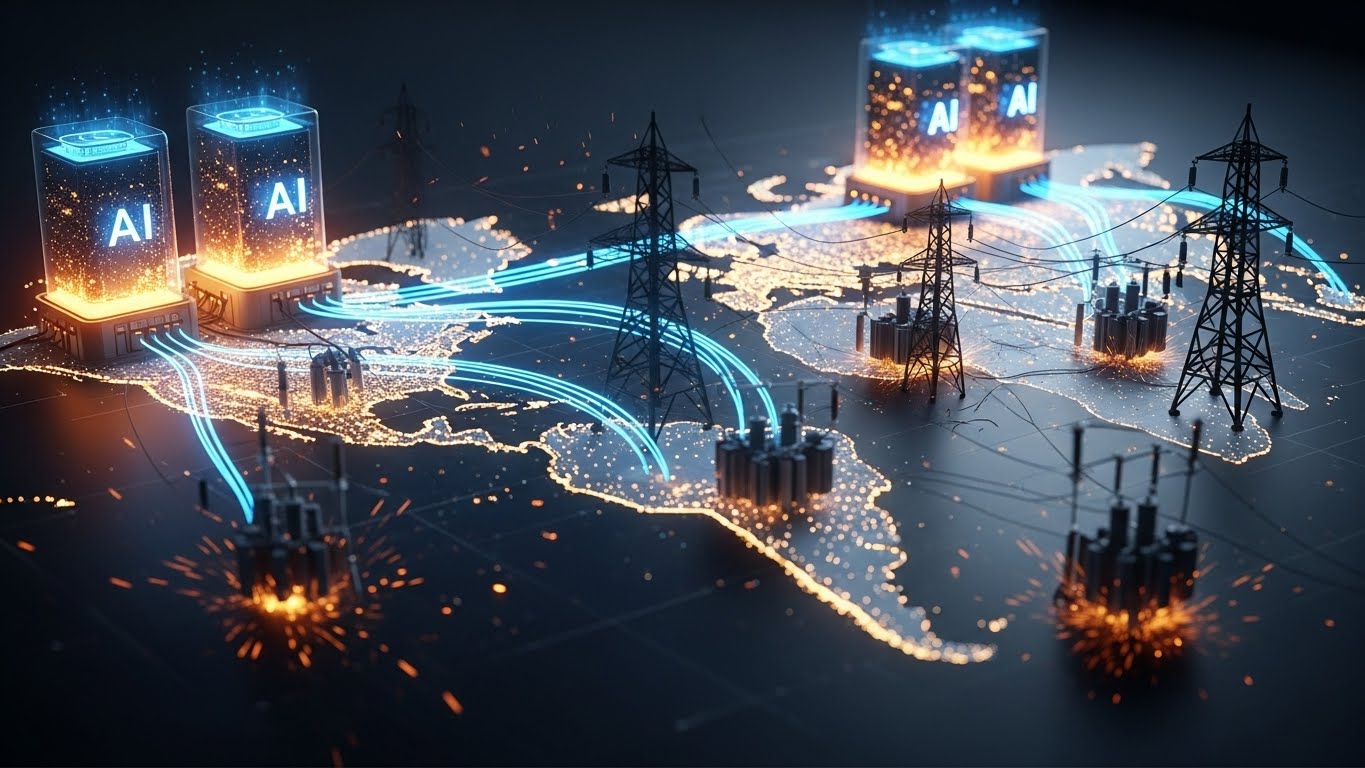
Despite alarming headlines, the IEA does not predict a global grid collapse. Instead, it warns of localized and regional stress, especially where AI infrastructure grows faster than grid upgrades.
Why the Risk Is Uneven
- Electricity grids are regional networks with physical limits
- Clustering of AI facilities can overload transformers, transmission lines, and substations
- Peak demand congestion can delay connections for new data centers
- In some regions, new facilities wait years for grid access, not due to lack of global power but because local infrastructure cannot scale fast enough
Case Studies: Where AI Is Already Straining Power Systems
Certain global data center hubs are already experiencing pressure. Common patterns include:
- Concentration of hyperscale AI facilities
- Competition between residential, industrial, and digital demand
- Utilities forced to delay or limit new connections
These examples show that the challenge is not total energy supply, but grid readiness and planning speed.
AI Isn’t Just a Problem — It Can Also Be Part of the Solution
Ironically, AI itself could help stabilize power systems if applied strategically.
How AI Can Strengthen Power Grids
- Demand forecasting: Improves load prediction accuracy
- Smart grids: Automates balancing between supply and demand
- Predictive maintenance: Reduces outages and infrastructure failures
- Renewable integration: Optimizes variable solar and wind output
The IEA emphasizes that digitalization, when deployed strategically, can make grids more efficient, resilient, and flexible.
Can Renewable Energy Keep Up With AI’s Power Needs?
The IEA 2026 outlook is cautiously optimistic: renewable energy is growing fast enough to meet much of AI’s added demand, provided deployment continues at scale.
Supporting Factors
- Solar and wind are the fastest-growing power sources globally
- Battery storage costs are declining
- Corporate power purchase agreements are expanding
Remaining Challenges
- Intermittency of renewables
- Storage capacity lagging behind generation
- Need for grid upgrades to distribute clean energy effectively
In some regions, nuclear power and long-term clean energy contracts also support AI-driven demand growth.
What the IEA 2026 Report Signals for the Future
The core message is clear:
The world has enough energy resources, but grid infrastructure is not keeping pace.
Key warnings include:
- Grid investment must accelerate sharply
- Permitting and planning reforms are urgently needed
- Underestimating AI-driven demand could create local bottlenecks
Inaction today could lead to delays and shortages tomorrow, even if global energy supply remains sufficient.
Is AI Really Pushing Global Grids to the Breaking Point?
The Reality
- AI is not collapsing global grids today
- Local and regional networks are already under strain
- Growth without planning increases risk
The Real Threat
The danger is not AI itself — it’s slow infrastructure adaptation. Coordinated action by governments, utilities, and tech companies can manage AI’s electricity demand. Without it, congestion and delays could hinder both digital expansion and clean energy adoption.
Conclusion: The Real Challenge Is Speed, Not Power
The IEA 2026 report doesn’t predict an imminent collapse, but it issues a serious warning: AI’s energy appetite is growing faster than grid investments, regulatory approvals, and infrastructure upgrades.
The challenge isn’t whether the world can supply electricity to AI — it’s whether it can do so quickly enough. AI is forcing a long-overdue conversation about grid modernization, energy planning, and digital sustainability. How we respond will define the future of both artificial intelligence and global energy security.
Call to Action
What do you think?
- Is AI accelerating energy innovation or exposing grid weaknesses?
- Should governments prioritize grid upgrades over AI expansion?
- Can renewables realistically keep up with AI’s power demands?
💬 Share your thoughts in the comments, and explore our related articles on AI, energy transition, and the future of global power systems.
FAQ
1: How much electricity does AI consume globally?
AI workloads, especially in data centers, currently account for a fast-growing portion of global electricity demand. The IEA 2026 report projects that data center energy use could more than double by 2026, with AI being one of the fastest-growing contributors.
2: Is AI really pushing power grids to the breaking point?
Not globally — AI is not collapsing power grids today. The risk is localized stress in regions where AI infrastructure is clustered faster than grid upgrades. Coordinated investment and planning can prevent major outages.
3: Can renewable energy meet AI’s growing power needs?
Yes, but only if renewable deployment continues at scale. Solar, wind, battery storage, and corporate clean energy agreements are growing fast enough to cover much of AI’s additional demand, though intermittency and grid upgrades remain challenges.
4: How can AI help stabilize power grids?
AI can improve grid efficiency through predictive maintenance, smart load balancing, demand forecasting, and better integration of variable renewable energy, making grids more resilient and flexible.
5: What does the IEA 2026 report recommend for managing AI-driven electricity demand?
The report urges faster grid investment, permitting reforms, and infrastructure upgrades to handle AI-driven growth, emphasizing proactive planning to avoid local bottlenecks while supporting renewable energy expansion.
Recommended Reading:
Sources:
- IEA Global Electricity Report
- IEA: Data center energy consumption set to double by 2030 to 945TWh
- AI’s Energy Dilemma: Can Tech Drive A Sustainable Energy Future?
- Energy & AI
Advertisement