For decades, the world has been trying to solve the plastic crisis by asking consumers to recycle. But as we’ve seen, recycling is a leaky bucket. In 2026, the focus has shifted from how we throw things away to how we build them from the start.
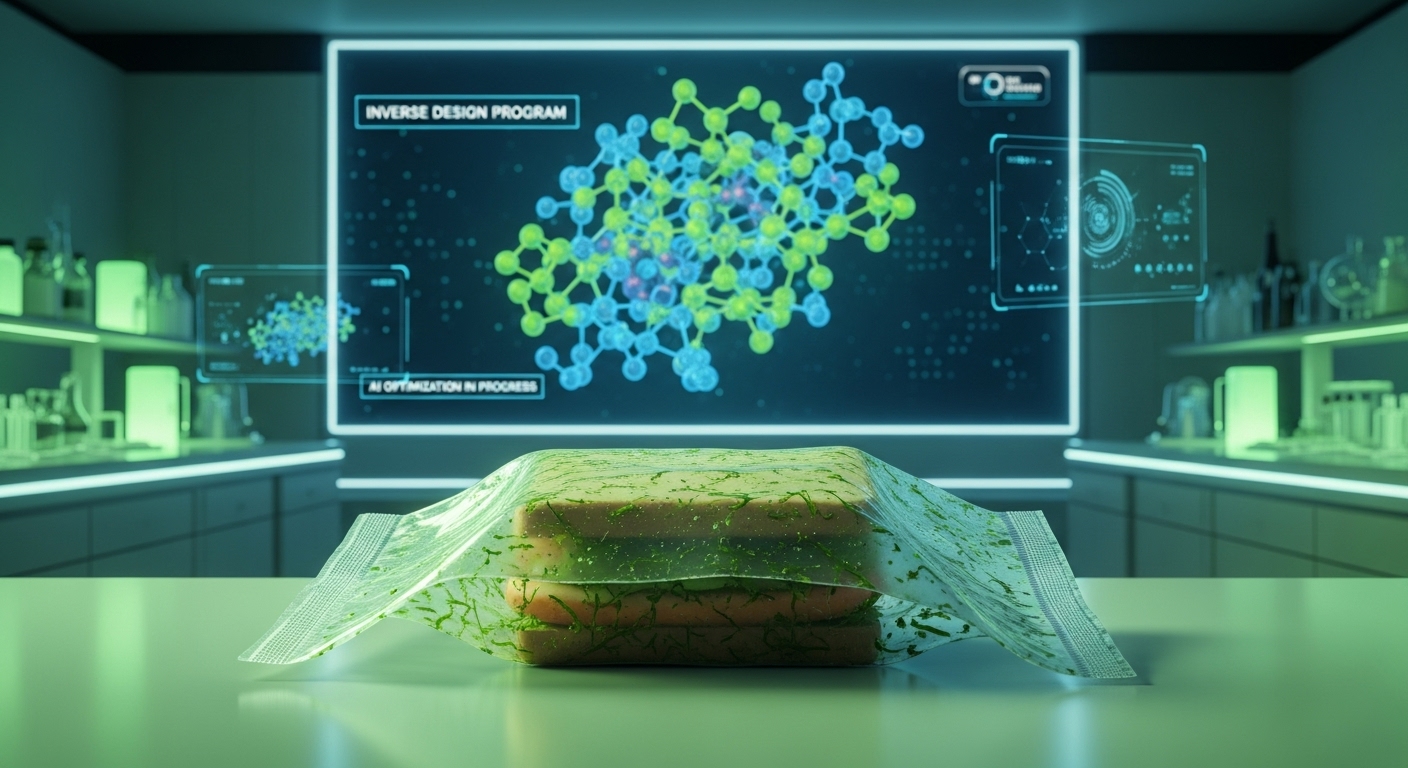
At the World Economic Forum (Davos 2026) this week, the spotlight isn’t on policy—it’s on “Inverse Design” AI. This technology is doing for materials what ChatGPT did for writing: creating something entirely new from scratch.
What is “Inverse Design” AI?
Traditionally, discovering a new material was a process of trial and error that took 10 to 20 years. Scientists would mix chemicals and hope for a specific result. Inverse Design flips this. Scientists now tell the AI: “I need a material that is as strong as plastic, dissolves in ocean water in 30 days, and is made from seaweed.”
Advertisement
The AI then works backward, simulating millions of molecular combinations in hours to find the perfect “recipe.”
The Algae Revolution
The standout material of 2026 is Algae-based polymer. Unlike corn-based plastics (PLA) which often require industrial composting, these new AI-optimized algae wrappers are truly “home compostable.”
According to data released by the Global Circular Economy Forum in early 2026, AI-driven material discovery has accelerated the production of algae packaging by 400% in the last two years. Startups in California and Maine are already replacing thin-film plastics—the kind used for bread bags and snack wrappers—with these seaweed alternatives.
A recent 2026 pilot study in the UK and US showed that AI-designed algae packaging fully degraded in a standard garden compost bin within 42 days, compared to traditional plastic which remains for centuries. This marks the first time a bio-material has matched the shelf-life of plastic while maintaining 100% biodegradability.
Why 2026 is the Year of the Circular Economy
With global “Plastic Taxes” taking effect in several U.S. states and EU countries this year, companies are desperate for alternatives. AI Inverse Design isn’t just an environmental win; it’s a financial necessity for corporations looking to avoid heavy fines.
We are moving away from a world where we “manage” waste and toward a world where waste doesn’t exist. Thanks to AI, the molecular building blocks of our daily lives are being redesigned to work with nature, not against it.
Recommended Reading:
- Is That Plastic Recyclable? How 2026’s AI Visual Search Is Saving Our Oceans
- CES 2026: LG’s AI Home Robot and Samsung’s EdgeAware
References & Further Reading
- World Economic Forum (WEF). (Jan 2026). The Circular Economy Transition: AI-Powered Material Innovation. weforum.org
- Nature Materials. (2025). Accelerating Biodegradable Polymer Discovery via Inverse Design AI. nature.com/natmat
- Notpla. (2026). The 2026 Scaling of Seaweed-Based Packaging in the US Market. notpla.com/news
Advertisement