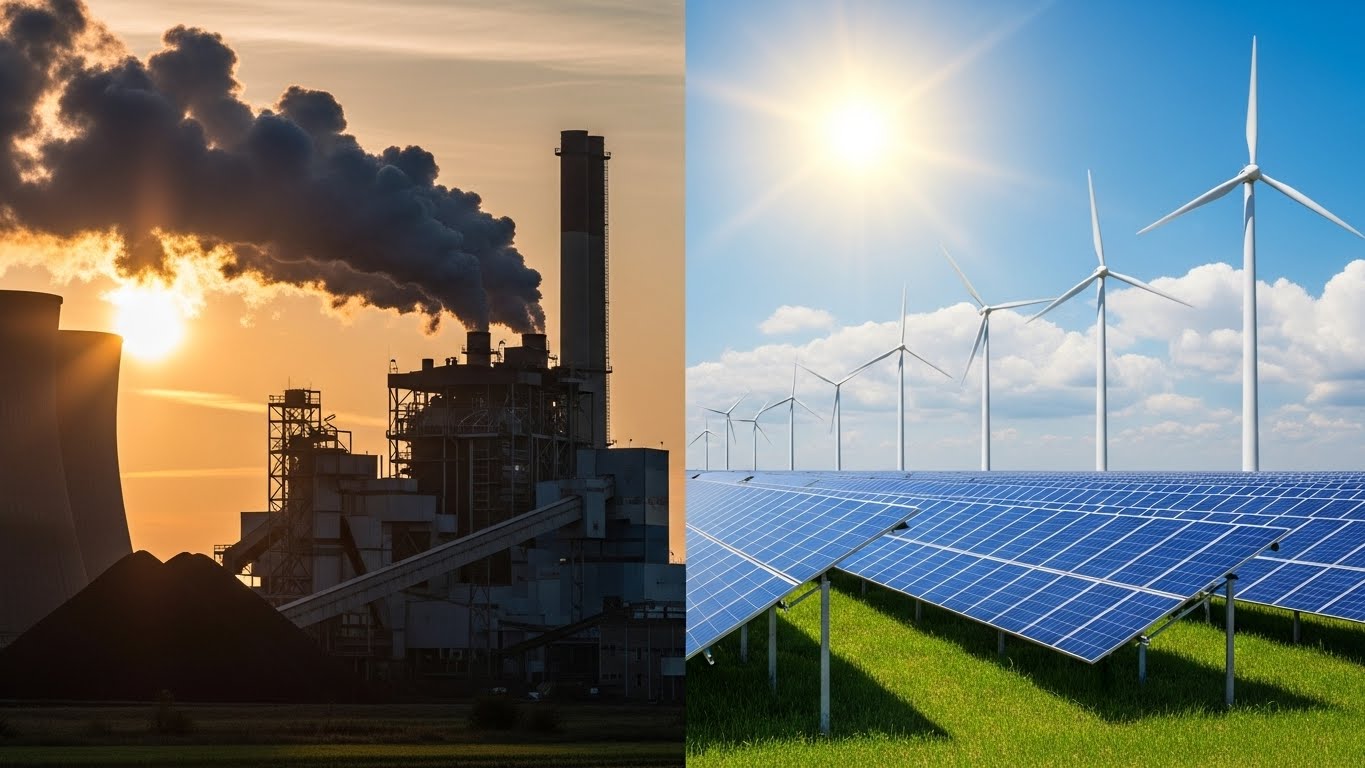
It’s official. As we cross into mid-January 2026, the global energy landscape has hit a milestone that experts have predicted for decades. For the first time since the Industrial Revolution, renewable energy has surpassed coal to become the single largest source of electricity on the planet. This isn’t just a win for the environment; it’s a total reimagining of how the world powers itself.
FAQ: The End of the Coal Era?
1. How did renewables finally beat coal?
It was a combination of two things: unprecedented solar growth and a sharp decline in coal-fired generation in China and India. According to IEA data, renewables now account for 36% of global power supplies, while coal has dropped to 32%—its lowest share in over a century. Solar and wind alone now provide nearly 20% of the world’s electricity.
2. Is coal going away forever in 2026?
Not yet. While renewables are now the “king” of the grid, coal still remains a significant “swing factor” for energy security in many developing nations. However, the economic argument for coal is disappearing. In 2026, more than 90% of new renewable projects are cheaper to build and operate than existing coal plants.
Advertisement
3. What role did Asia play in this transition?
Asia was the primary driver. Despite their historical reliance on fossil fuels, China and India added record-breaking solar capacity in 2025, which began paying off in early 2026. China alone accounts for nearly half of the world’s new renewable installations, effectively “sealing the fate” of coal growth in the region.
4. Can the grid handle this much renewable power?
This is the biggest challenge of 2026. Because solar and wind are intermittent (they don’t produce power when the sun isn’t shining or the wind isn’t blowing), the focus has shifted from generating power to storing it. This is why Battery Energy Storage Systems (BESS) and “Smart Grids” are seeing more investment this year than the power plants themselves.
The “Renewable Era” has officially begun. We are no longer talking about a future transition; we are living in it. As the cost of solar continues to plummet and the efficiency of battery storage rises, the gap between clean energy and fossil fuels will only widen from here on out.
Recommended Reading:
With more green power, the market is changing. Learn why used EV prices are crashing in 2026.
Sources:
- International Energy Agency (IEA) – World Energy Outlook 2026
- Ember – Global Electricity Review 2026
- S&P Global – 2026 Sustainability Trends
Advertisement