
You’re standing in your kitchen, holding an empty plastic container. It looks recyclable. There’s a symbol on the bottom. But is it actually recyclable where you live? You hesitate, then drop it into the blue bin—hoping you made the right choice.
This moment, known as “wish-cycling,” plays out billions of times every year across the United States. Unfortunately, this well-intentioned guessing game is a primary driver of recycling contamination, causing massive system inefficiencies and a steady flow of plastic into our oceans.
But as we move through 2026, this everyday dilemma is being solved by a powerful technological shift: AI Visual Search.
Advertisement
Why the Old System Failed Us
For decades, the “chasing arrows” symbol has been one of the most misunderstood icons in America. Most consumers assume the triangle means “recyclable.” In reality, it often only indicates the type of plastic resin used.
According to recent 2026 environmental impact reports, traditional manual sorting at Material Recovery Facilities (MRFs) can only process about 50 to 80 items per hour per person, with significant margins for error. This human limit, combined with the complexity of multi-layer packaging, has left our recycling rates stagnant for years.
Enter AI Visual Search: The 2026 Turning Point
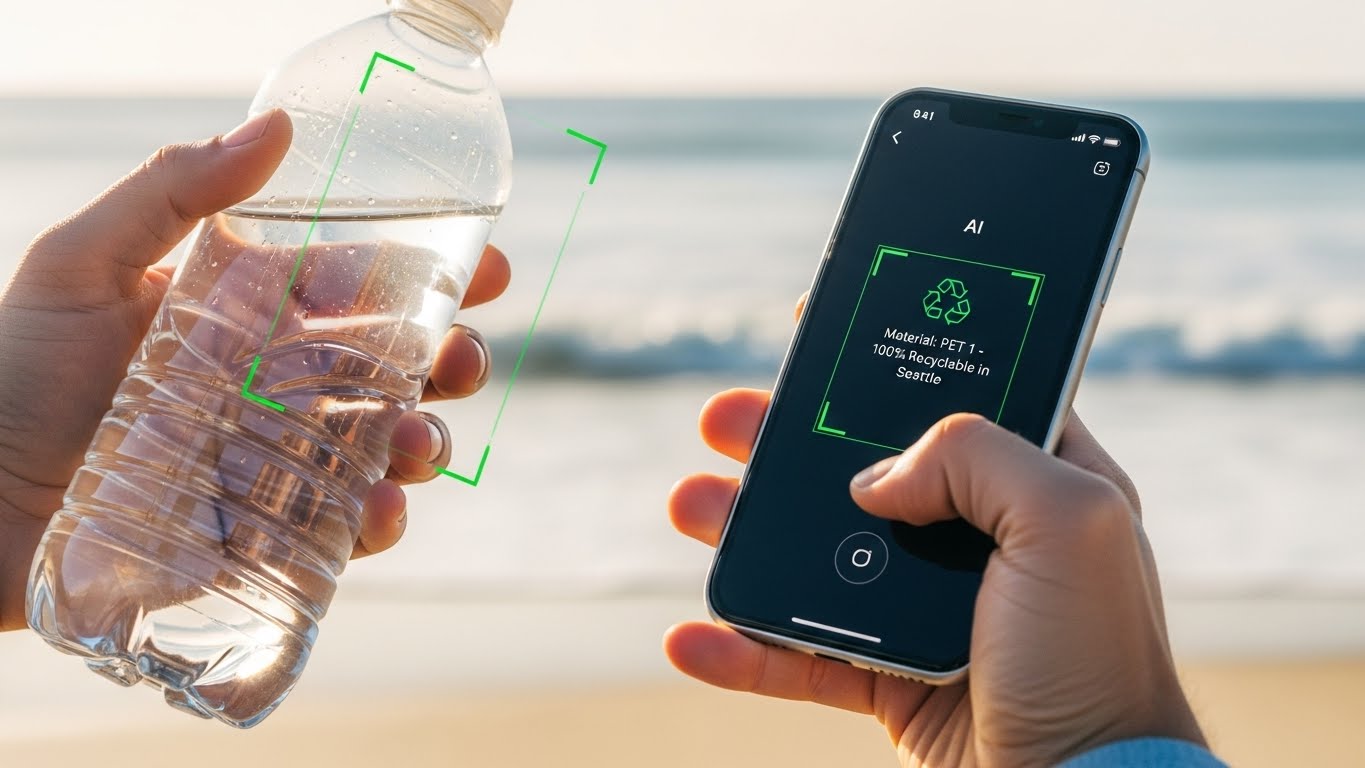
AI visual search changes the logic of waste. Using advanced computer vision and neural networks, your smartphone can now “see” plastic the way a scientist does.
Data from leading 2026 recycling tech firms like Greyparrot and AMP Robotics shows that AI-powered optical sensors can now sort up to 1,000 items per hour with an accuracy rate exceeding 99%. By simply pointing your phone camera at an item, AI analyzes its shape, transparency, and even brand-specific packaging to give you instant, localized disposal instructions.
Saving Our Oceans, One Scan at a Time
The true victory of AI visual search isn’t just in the kitchen—it’s in our oceans. By preventing contamination at the source, AI ensures that recyclable plastics actually get recycled instead of being diverted to landfills or escaping into waterways.
In 2026, drones equipped with this same AI technology are patrolling U.S. coastlines, identifying plastic debris patterns before they break down into harmful microplastics. This “upstream” prevention is proving to be 10 times more cost-effective than “downstream” ocean cleanup efforts.
The Verdict: Is AI the Savior of Recycling?
While AI visual search isn’t a “magic wand”—it still requires localized infrastructure and public participation—it represents the first time in history that consumers have the right information at the right time.
In 2026, the question is no longer “Is this recyclable?” The question is “Why aren’t you scanning it?”
References & Further Reading
- U.S. Environmental Protection Agency (EPA). (2025). The State of Recycling in America: 2026 Technical Report. epa.gov/recycling-strategy
- Plastics Today. (Jan 2026). AI Transforms Recycling with 60% Efficiency Gains. plasticstoday.com
- Lamont-Doherty Earth Observatory. (2025). How AI Is Revolutionizing the Recycling Industry. lamont.columbia.edu
- MDPI Sustainability Journal. (2025). Recent Advancements in AI for Waste Sorting and Ocean Protection. mdpi.com
Advertisement